We’re commemorating America’s 250th anniversary this Independence Day. As we celebrate our nation’s past and the rule of law, we also look towards strengthening the public’s understanding and trust of the judicial branch. Justice David K. Overstreet shares his thoughts on the significance of this anniversary and more.
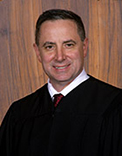
What is the significance of America’s 250th
anniversary to you?
I am grateful that America and its ideals have withstood the test of time from its historic and unprecedented birth, through its preservation and promise of liberty for all races as fought and died for in our Civil War, through the challenges of meeting America’s ideals to this day. I stand in awe of the promise of the Declaration of Independence and believe it is up to us today and to all future generations to make sure that promise is fulfilled.
What do you think being an American means today?
Being an American today means striving to pursue liberty and justice for all Americans above all other political considerations. Our country needs this shared sense of responsibility among all Americans so that we can pass along to future generations what has truly made America great. As Alexis de Tocqueville wrote in his 1835 work Democracy in America, “America is great because America is good.” That is still true today.
Courts must have the independence to deliver fair justice. What do you think is the importance of transparency and accountability in the courts?
A bedrock principle of America is a fair and independent judiciary and our system of checks and balances. In order for this principle to continue to be honored the courts must be perceived and be in reality open in carrying out its duties and administrating justice. This is critical for the public to maintain its confidence in an independent judiciary and for our democracy to continue to flourish.
Can you share a memorable experience in your career that has influenced your perspective on the legal process?
I had the privilege of presiding over 30 jury trials when I served as a Circuit Judge in the Second Judicial Circuit. I’m a firm believer in our right to a jury trial as guaranteed by the Sixth and Seventh Amendments to the United States Constitution. I witnessed the beauty of our system when a couple of Amish carpenters were sued in Jefferson County for injuries sustained by a neighbor who asked for their assistance in his installing an attic staircase which later collapsed and caused significant injuries to the neighbor. The Amish carpenters for religious reasons did not believe in having an attorney represent them at trial. Evidence was presented and the jury came back with a no liability verdict, but I was impressed that these defendants could present a defense, the plaintiff’s attorneys were professional and represented their client with diligence and honor too, and the jury exercised their responsibilities admirably as well. This experience, more than any other case I was a part of, renewed my faith and reverence for our jury system.
How do you hope to see the judicial branch/rule of law evolve by our country’s 300th anniversary?
I hope to see the rule of law continue to be honored and our judicial branch evolve over the next 50 years to provide greater opportunities for all of our people to have access to legal representation in civil cases and the promise of the Sixth Amendment fulfilled for defendants in criminal cases. This fulfillment may be realized through a strong and vibrant statewide public defender system as implemented now with the new public defender law. The challenge of meeting the representation needs of civil parties is a current and long-term issue that is being focused on by the Illinois Supreme Court and we seek solutions. I continue to be proud of the work of our Access to Justice Commission and Division and their work to make the dream of access to justice a reality for all who cannot afford or do not have access to legal representation.